
Commercial Snow Removal in Rochester, NY: A Guide for Property Managers and HOAs
This guide covers how to prepare your property, how to evaluate a provider, and how to structure a contract that protects you.
Why Does Commercial Snow Removal Matter for Rochester Properties?
Professional snow and ice management addresses all four of the following problems before they reach you:
1. Injury risk
2. Liability exposure
3. Blocked operations
4. Property damage.
It Reduces Your Liability Exposure
New York follows the storm in progress doctrine. Under it, a property owner's duty to clear snow and ice is generally suspended while a storm is active, and resumes a reasonable time after the storm ends. Outside New York City, there is no fixed clock. Courts weigh the severity of the storm, the time of day, the type of property, and the resources the owner had available. Commercial properties with heavy foot traffic are generally expected to respond faster than a private residence.
That last part matters. "Reasonable time" is decided after the fact, by people looking at records. A provider who documents every visit with times and photos is building the evidence you will need if a claim ever lands. A provider who does not leaves you arguing from memory.
PropertyCare logs each service visit with time stamps and site photos. You receive the record. Your insurer gets a defensible timeline.
It Protects Tenant and Resident Retention
For HOAs and multi-family properties, snow performance is visible every single day of winter. Residents who cannot safely reach their cars notice immediately, and they tell the board. Clear lots and treated walkways protect renewals and protect your reputation with the board.
It Keeps Your Business Open
At a retail plaza, office park, or medical building, an unplowed lot is a closed sign. Customers drive past. Employees arrive late or not at all. Deliveries get missed. Reliable snow service keeps the doors usable and the revenue moving.
It Takes the 4 a.m. Decision Off Your Plate
Managing snow yourself means watching radar at night and making judgment calls about when to call someone. A professional partner monitors the forecast, dispatches crews, and communicates status. You get your attention back for the rest of your job.
How Do Rochester's Winters Actually Behave?
Rochester averages roughly 100 inches of snow per season, measured at Frederick Douglass Greater Rochester International Airport. That figure alone understates the challenge, because the variation between seasons and between neighborhoods is extreme.
Consider the range. Rochester's snowiest winter on record was 1959 to 1960 at 161.7 inches. The least snowy was 1932 to 1933 at 29.2 inches. In recent seasons, the swing has stayed wide: one winter finished at 50.4 inches, while another passed 100 inches by mid-February. The National Weather Service puts the broader Rochester region between 70 and 120 inches in a typical year, depending on where you are.
Month by month, the load is front-loaded into midwinter. Average snowfall since 1940 runs 7.2 inches in November, 19.8 in December, 24.3 in January, 22.7 in February, and 15.3 in March.
Why Lake-Effect Snow Changes the Math
Lake-effect snow forms when cold air moves across the relatively warm water of Lake Ontario, picks up moisture, and drops it as narrow, intense bands downwind. Those bands are the defining feature of a Rochester winter, and they behave differently from a regional storm system.
Two things follow from that. First, totals are local. A band can sit over one corridor and bury it while a property four miles away gets a dusting. A regional forecast will not tell you what your site is getting. Second, the bands move. A crew that reads band positioning can pre-position equipment ahead of where the snow is going, instead of reacting after it arrives.
Rochester also sees about 29 days per season with at least an inch of new snow, and roughly three to four events per year exceeding five inches in a day. Most of winter is not a blizzard. Most of winter is repeated, moderate accumulation with freeze and thaw cycles in between, which is exactly where ice management matters more than plowing.
Plan ahead. Secure your snow contract before the first storm. Commercial routes are built and staffed in advance, and waiting until late fall narrows your options and raises your cost.
What Are the Basics of Commercial Snow and Ice Management?
Commercial snow and ice management combines plowing, ice control, and documentation under a defined service plan. The elements below are what separate a real program from a truck with a plow.
Start With a Site Plan
A site plan defines the work before winter starts. It sets the service level for each zone, maps where snow gets pushed and stacked, identifies priority areas like ADA access and fire lanes, and flags drainage points that refreeze.
PropertyCare builds a plan for every property we service. We walk the site with the crew leads assigned to it, set service levels with you, and map snow storage before the first flake. The crew that shows up during a storm already knows your lot.

Ask About Training and Experience
Equipment is easy to buy. Judgment is not. A light dusting that refreezes overnight demands a different response than eight inches of heavy lake-effect snow. The right call depends on pavement temperature, precipitation type, and timing relative to when your tenants arrive.
Crews that work the same properties year after year develop that judgment. Ask any provider how long their crew leads have been with them, and how many commercial sites they run.
Understand Your Contract Options
Rochester commercial snow contracts run seasonally, roughly November through early April. What changes between contracts is not the work. It is how the work is counted and billed.
PropertyCare offers three packages. All three cover the same four services: plowing, salting, shoveling, and walk salting. The difference is how you pay for them.
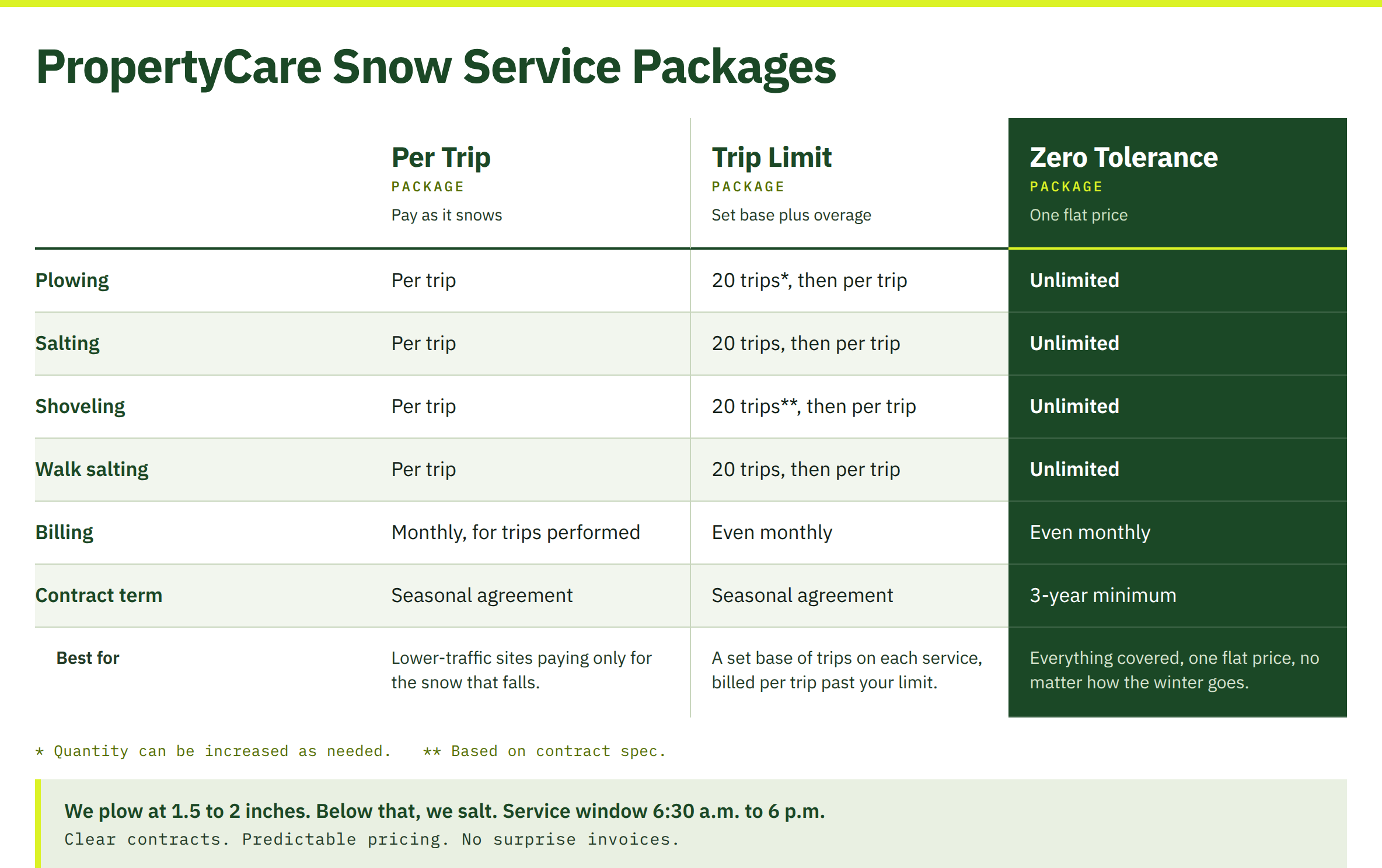
Per Trip. You pay for each trip performed, on each of the four services. Billed monthly for trips performed, under a seasonal agreement. This fits lower-traffic sites that want to pay only for the snow that actually falls.
Trip Limit. A set base of 20 trips on each of the four services, then per trip past your limit. Billed in even monthly installments under a seasonal agreement. Trip quantities can be increased as needed, and shoveling is set by contract spec. This is the middle ground: an even monthly cost with a defined base before any overage.
Zero Tolerance. Unlimited plowing, salting, shoveling, and walk salting for one flat price. Billed in even monthly installments on a three-year minimum. Your cost is fixed no matter how the winter goes. This is for facilities that have little to no tolerance for snow accumulation, like a hospital or airport.
Given a market that has swung from 29.2 inches to 161.7 inches in a single season, this choice is a genuine risk decision rather than a formality. Per Trip tracks actual conditions and costs the least in a mild winter. Zero tolerance moves the weather risk to us and locks your budget for three years. Trip Limit sits between the two.
What Triggers Service
Operating terms are the same across all three packages. We plow at 1.5 to 2 inches of accumulation. Below that threshold, we salt. During an active storm, we run our route and return as conditions require. The contracted service window runs 6:30 a.m. to 6 p.m.
Ask any provider for these numbers in writing before you sign. A trigger depth, a service window, and a defined overage rate are what turn a quote into a contract you can hold someone to.
Evaluate Equipment and Readiness
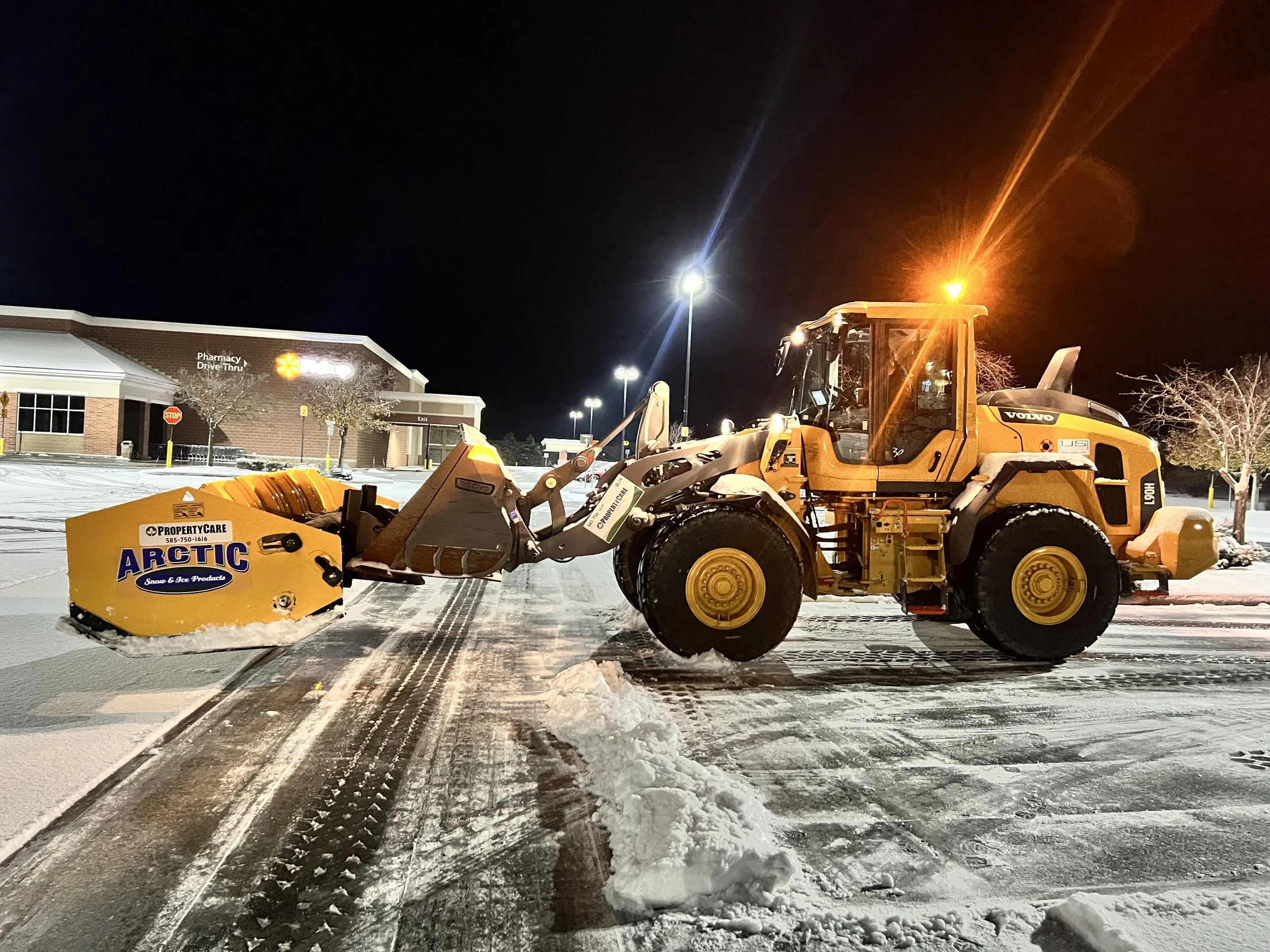
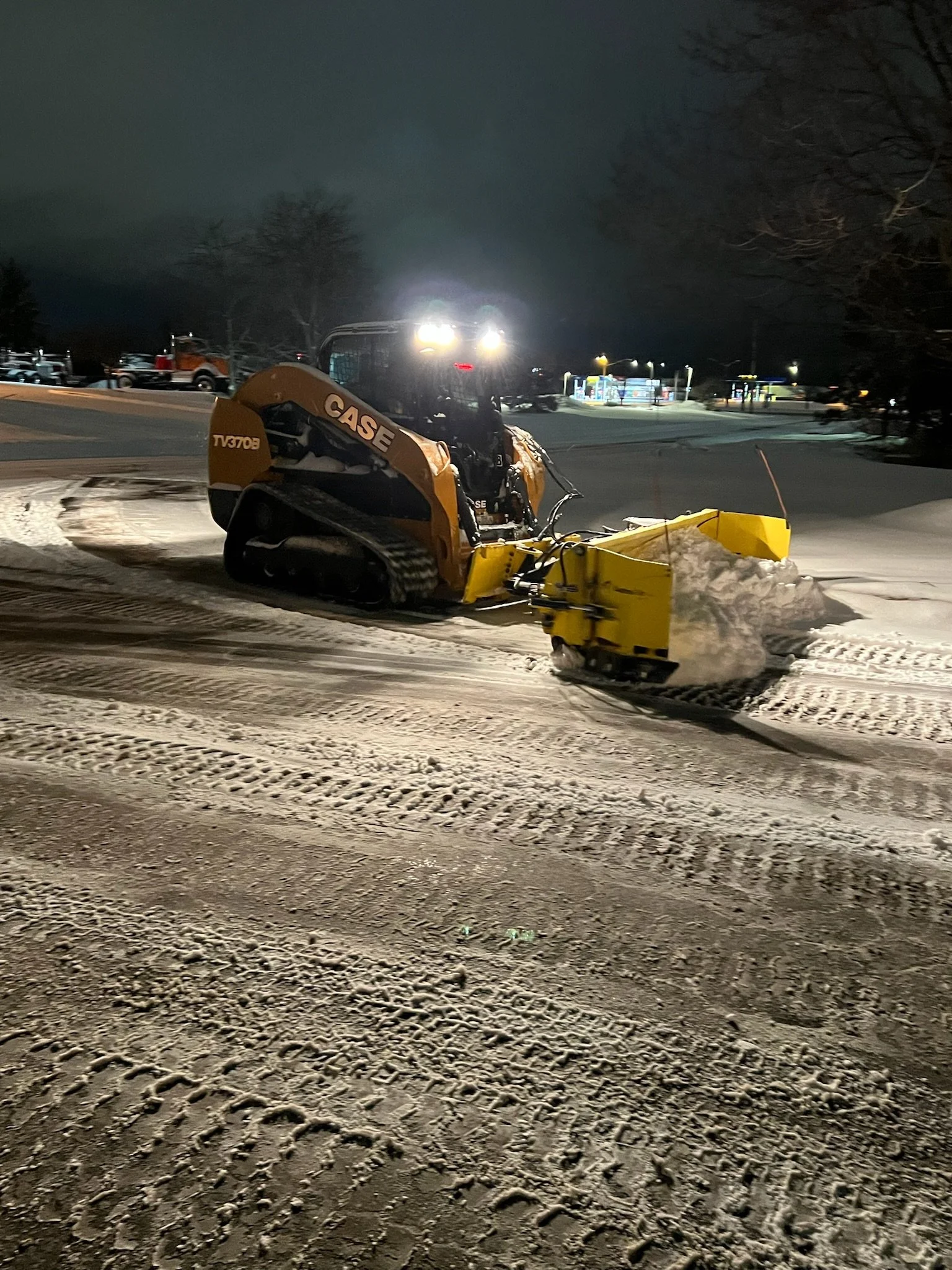
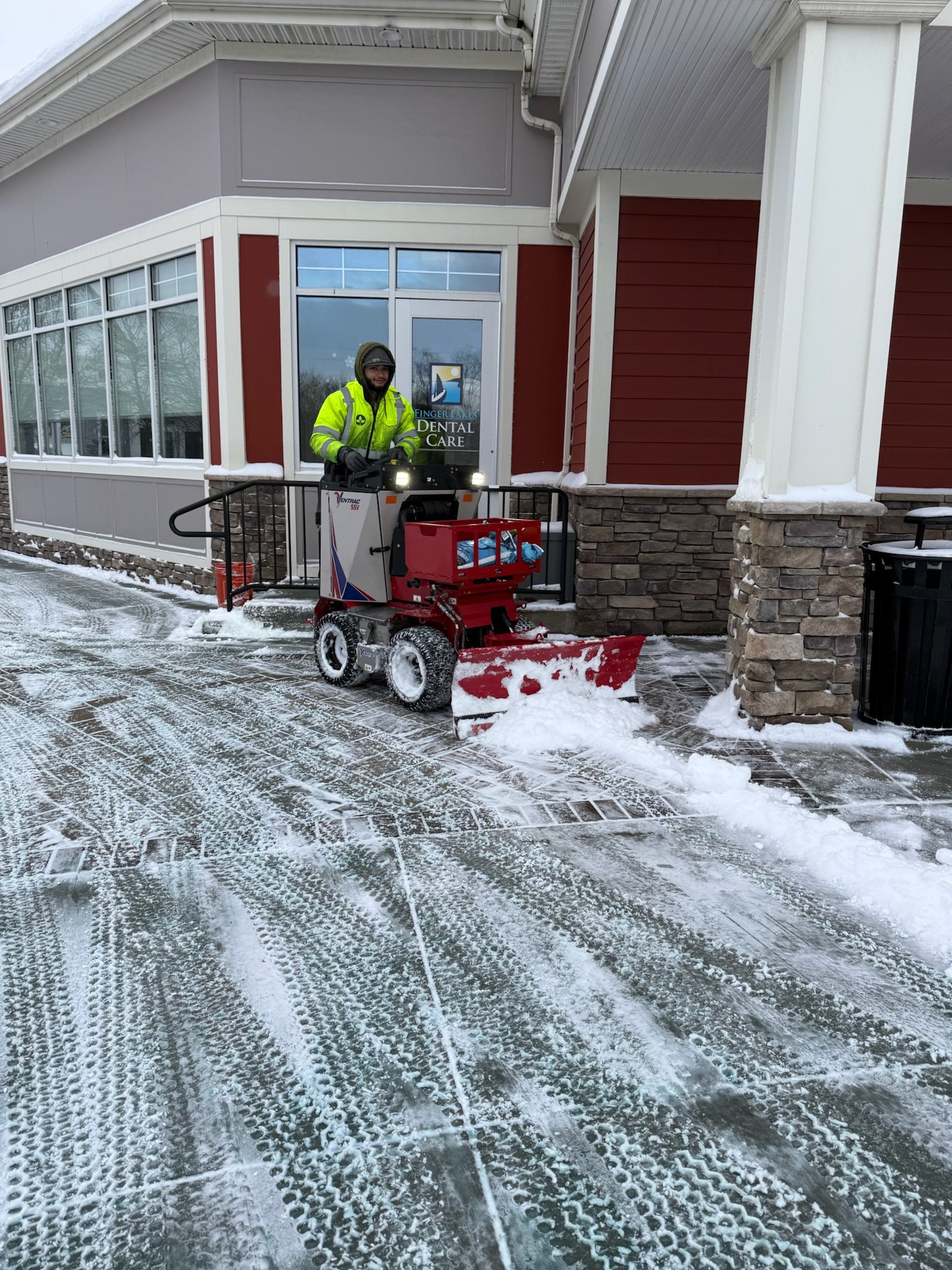
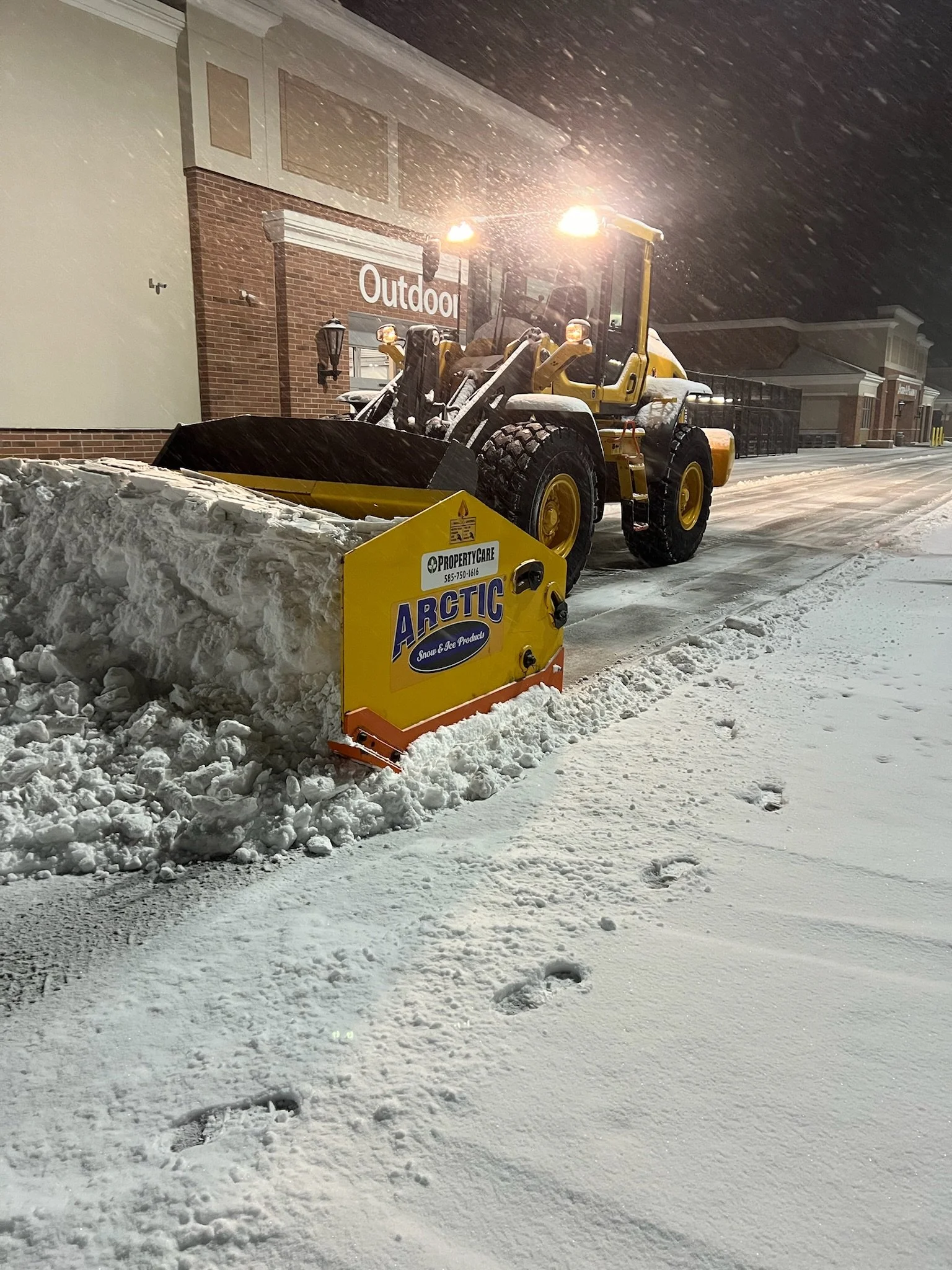
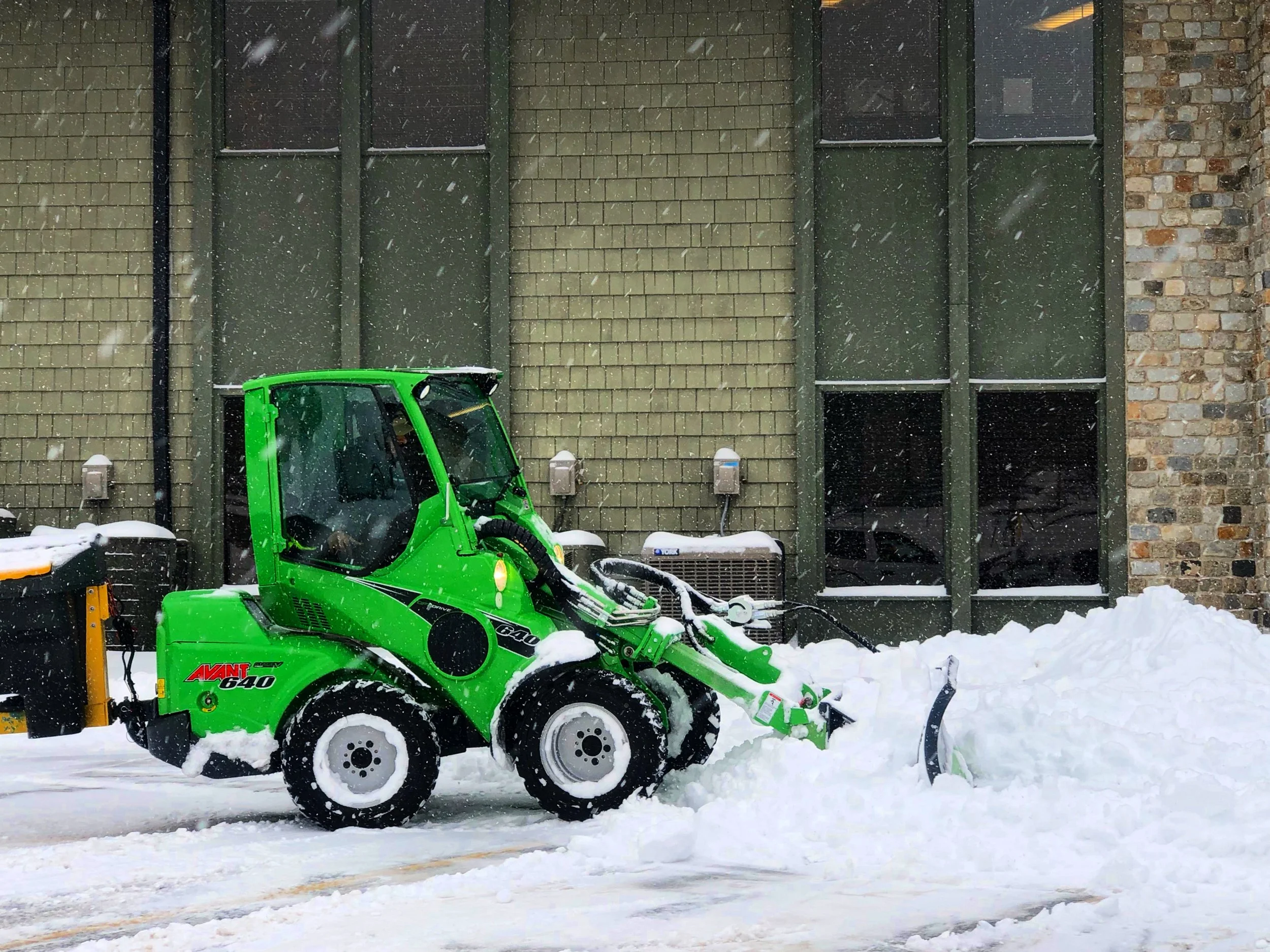
Clearing a commercial site takes matched equipment: loaders and pushers for open lots, skid steers for tighter areas, dedicated sidewalk machines for walkways, and spreaders for ice control.
Readiness is the part clients rarely see. PropertyCare secures salt, materials, and equipment months ahead of the season rather than competing for supply once winter starts. Every plow, spreader, and truck is inspected and serviced before the season opens. We renew equipment on a regular cycle so machines are not failing during the events that matter most.
For sites where response time is critical, we stage equipment directly on the property. Staged equipment removes travel time from your response window. When the storm starts, the machine is already there.
Prioritize Communication and Accountability
This is the difference between a vendor and a partner. You should never have to wonder whether your lot was plowed, when salt went down, or who to call.
Every PropertyCare commercial client works with a dedicated Client Relationship Manager. That is one local person who knows your property, coordinates your crew, and answers your call. Not a ticket queue. Not a national dispatch line.
How Do You Design a Snow and Ice Management Plan?
A good plan is built before winter and specific enough that a new crew member could follow it.
Do Not Rely on In-House Maintenance Staff
Snow and ice work requires specialized equipment, training, and insurance. Assigning it to your building maintenance team pulls them off their actual responsibilities and exposes them to risk they are not equipped or covered for. It also tends to fail exactly when the storm is worst.
Do Not Treat Appearance as Optional
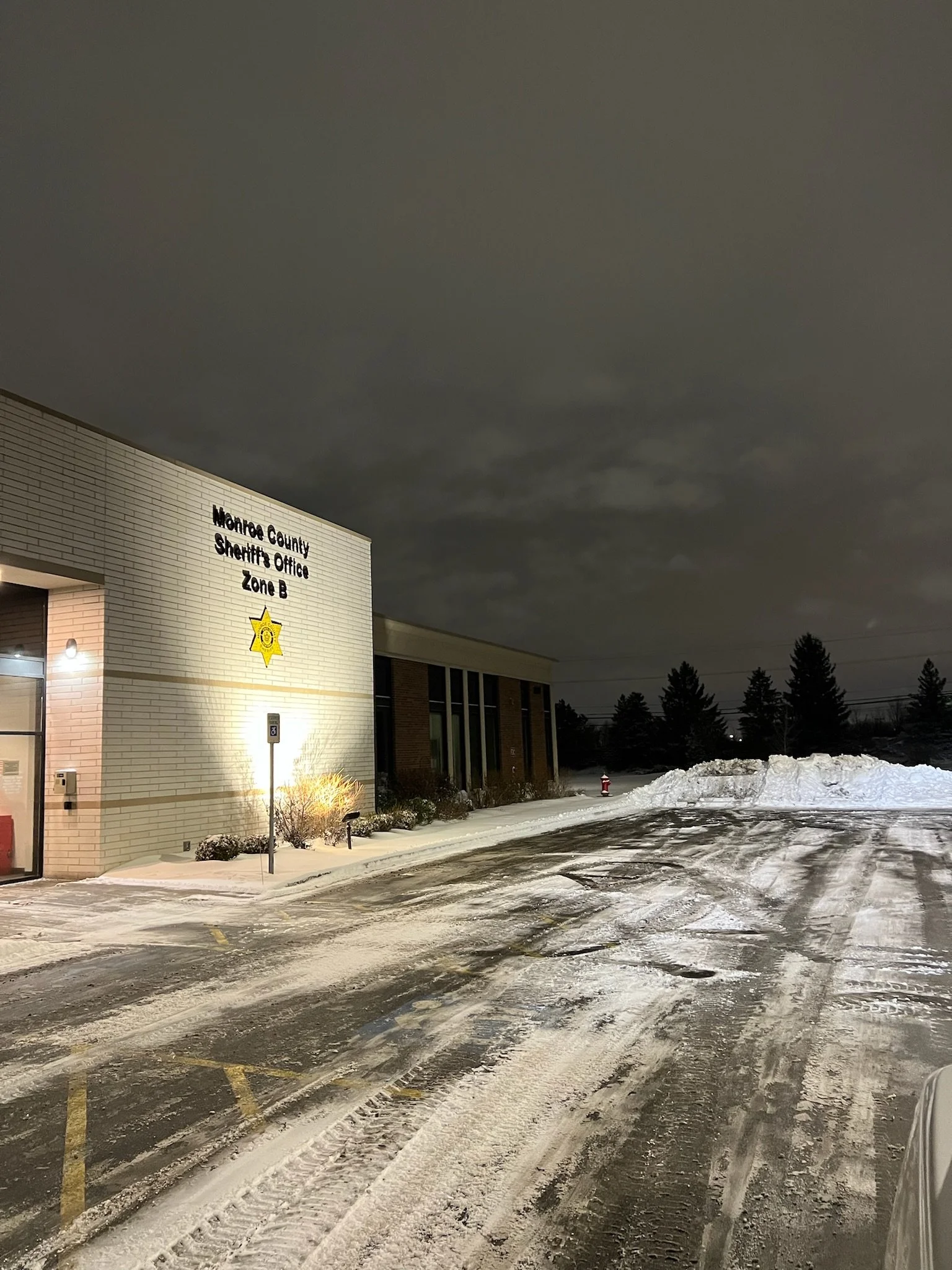
Snow piled in the wrong place blocks sightlines, eats parking spaces, and melts back across drive lanes to refreeze. Where snow goes is a design decision, not an afterthought. Poorly managed piles cost you parking capacity all winter and cause damage in spring.
Get the Timing Right
Timing separates ice management from snow removal. Pre-treatment before a storm prevents bonding between snow and pavement, which makes plowing more effective and reduces total salt use. Re-application timing depends on pavement temperature and refreeze risk, not on the calendar.
Rochester's freeze and thaw cycles make this the highest-value part of the service. Meltwater that runs across a lot at 3 p.m. and refreezes at 8 p.m. produces black ice in the same spots every time. Those spots are identified in your site plan.
Communicate Continuously
Your provider, your tenants, and your staff should share the same picture. Confirm before the storm what the plan is, and after the storm what was done. Documentation should arrive without you asking for it.
How Can You Control Snow Removal Costs?
Snow service is an operating cost you can manage, as long as you manage it on purpose.
Define service levels by zone. Not every square foot needs the same response. Main entrances, ADA access, and fire lanes are non-negotiable. Overflow parking may not need the same treatment at the same hour. Tiering service is the single most effective cost lever.
Allow on-site storage. If you have space for a salt container or staged equipment, response times improve, and mobilization costs drop. This benefits both sides, which is why it often shows up in pricing.
Consider a multi-year agreement. Multi-year contracts stabilize pricing and secure priority routing. In a market with Rochester's volatility, locking in a rate has real value.
Put exceptional weather terms in writing. Snow hauling, ice chipping, and extended events should have defined pricing before the season. Surprise invoices in February come from vague contracts signed in September.
Bundle with your landscape maintenance. Using one provider year-round means the crew already knows your property, your contacts, and your drainage. It also gives you one relationship to manage instead of two. [CONFIRM: link to PropertyCare commercial landscape maintenance page.]
How Do You Choose the Right Snow Removal Partner in Rochester?
Ask every provider you are considering these four questions. The answers separate the field quickly.
1. Do they know how Rochester snow actually falls? Lake-effect bands are local and fast. A provider who reads band positioning moves crews before the first inch. A dispatcher in another state cannot.
2. Are they ready in July, or scrambling in November? Ask when they secure salt and materials, and when their fleet is inspected. Readiness happens in the offseason or it does not happen.
3. Can they be on your site before the storm peaks? Ask whether they build a site plan for each property and whether they stage equipment on site. Ask how many properties each crew covers.
4. Who answers when you call at 4 a.m.? Ask for the name and role of your point of contact. A dedicated Client Relationship Manager is a different commitment than a general phone line.
Also ask about capacity. A provider stretched across too many sites cannot prioritize all of them during a regional event. Ask how many commercial properties they service and how routes are assigned.
Get Your Rochester Property Ready for Winter
Winter here is unpredictable. Your snow plan does not have to be.
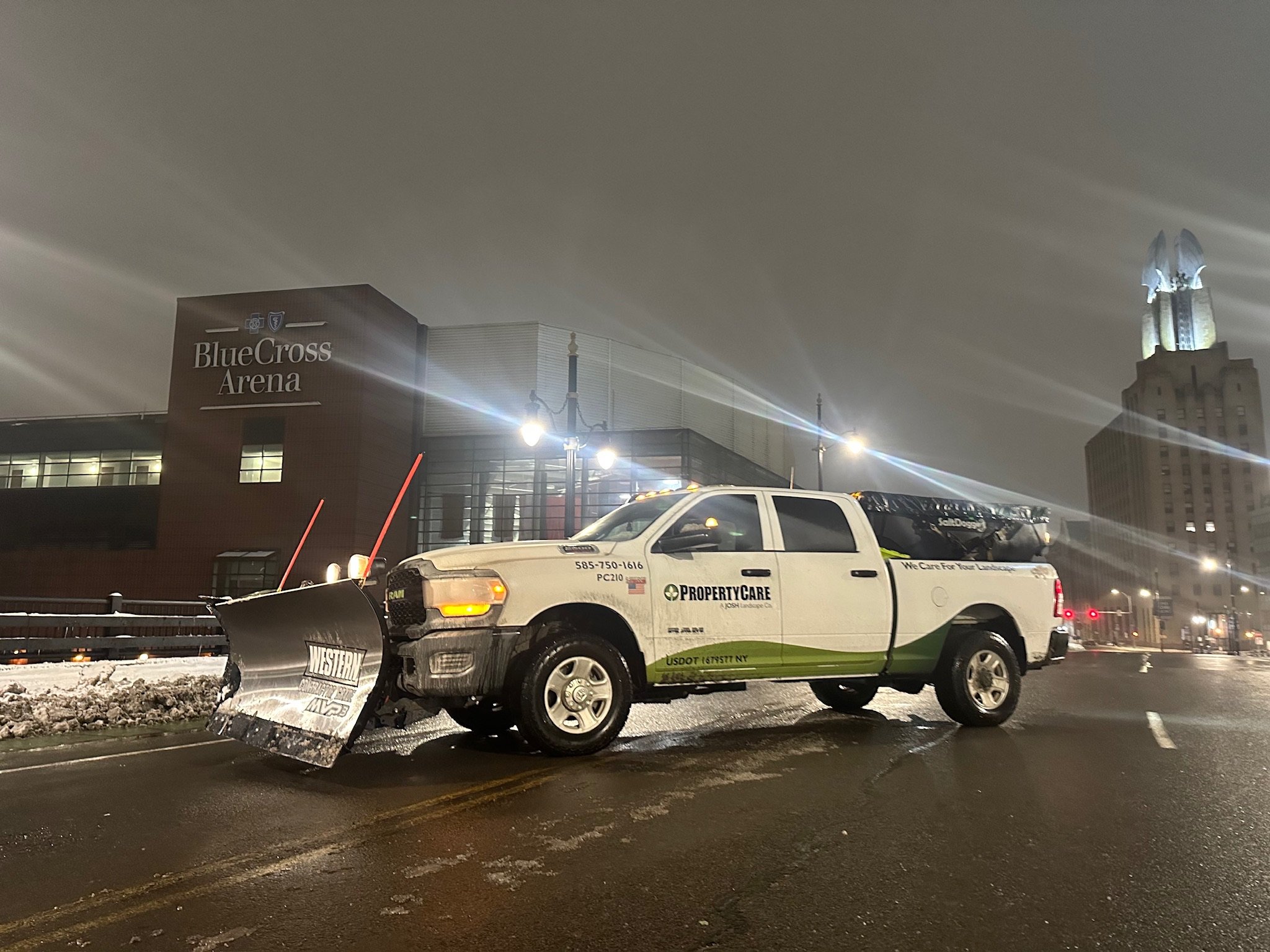
PropertyCare is locally owned and operated. We read Rochester's lake-effect patterns, prepare our fleet and materials months ahead, build a site plan for every property, stage equipment where response time matters, and assign you one Client Relationship Manager who answers.
Schedule a commercial site walk. We will assess your property, recommend service levels, and give you a fixed-season quote before routes fill.